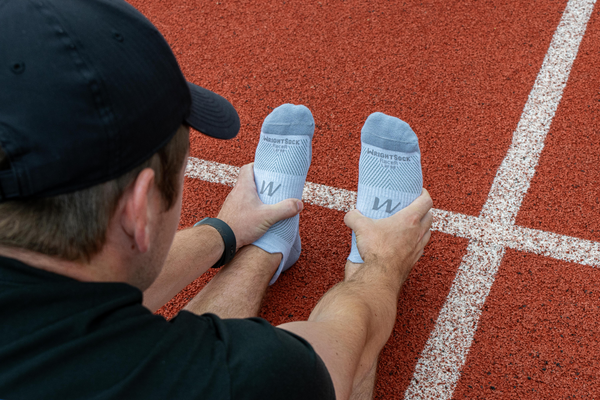
The best socks to wear with running shoes are moisture-wicking running socks that fit snugly, reduce friction, and help keep your feet dry from the first step to the final mile. It sounds simple, but the right sock can make or break a run. Socks sit right at the crossroads of comfort and performance, acting as the buffer between your foot and the inside of your shoe.
That matters more than many runners realize. The wrong pair of socks can trap sweat, create hot spots, and increase the chances of a painful blister.1 The right pair of running socks helps manage moisture, cushion impact, and support a smoother stride.
Those details matter because not all socks are created equal, and good comfortable socks can change how a run feels surprisingly fast. That’s why many runners start with performance running socks instead of everyday basics.
Why Your Sock Choice Matters When Running
When you run, your feet take a beating. There’s repeated impact, constant movement, and subtle shifting inside your shoe with every stride. Your running sock becomes the interface between skin and shoe, which means it has one very important job: to help everything work together.
The wrong socks can lead to:
-
Blisters
-
Hot spots
-
Sweaty feet
-
Slipping inside a shoe
Quality running socks help maintain a stable fit, support moisture management, and improve comfort over longer miles. If you’ve ever wondered whether running socks make a difference, the answer often comes down to choosing the right pair for your preferred activities.
Best Materials for Socks With Running Shoes
Material is where the magic starts. A sock’s fiber blend affects how well it can wick moisture, regulate temperature, and stay comfortable when your feet heat up.2 The right fiber mix can also influence durability, odor control, and how well the sock handles friction over time.3
Moisture-Wicking Synthetic Fabrics
Synthetic blends are a staple in performance socks for good reason. Fabrics like polyester, nylon, and elastane are designed to pull moisture away from the skin and dry quickly. That quick-drying feel helps reduce friction, keeps feet drier, and can improve your overall running experience.
Many of the best running socks use polyester and nylon because they’re lightweight, durable, and good at moving moisture away from the foot. In short, they help keep your feet dry and cool when things heat up.
Merino Wool Options
For runners who want softness and natural performance, merino wool is a strong option. It offers natural temperature regulation, solid odor control, and impressive moisture handling. A good blend of merino wool can feel breathable in warmer weather while still offering comfort in the cold.
That’s one reason some distance runners gravitate toward wool-based styles for long runs and changing conditions. Runners who want a softer or slightly plush feel sometimes prefer this category, especially when protection on longer efforts matters more than a stripped-down race-day feel.
Why Cotton Is Not Ideal for Running
A cotton sock may feel fine when you first put it on, but it usually falls apart once the run gets going. Cotton absorbs sweat instead of helping wick it away, which means the sock gets wet, heavy, and more likely to cause friction.
Wet socks can lead to blisters, especially over longer efforts. If you want a clearer breakdown of what to look for in a better running sock, exploring running sock features can help narrow it down.

How Sock Thickness Affects Your Running Shoes
Thickness changes how a sock feels inside your shoe, and that can affect both fit and comfort. It also changes how much cushioning sits under the heel, forefoot, and arch, which is why choosing between a thin sock and a thicker sock matters more than it seems.
Thin Socks for Performance Fit
Thickness changes how a sock feels inside your shoe, and that can affect both fit and comfort. It also changes how much cushioning sits under the heel, forefoot, and arch, which is why choosing between a thin sock and a thicker sock matters more than it seems.
Medium Cushion Socks for Daily Training
For everyday mileage, a moderate cushion is often the sweet spot. It provides comfort and impact protection without feeling bulky. For many runners, these are the best socks for regular training because they balance durability, arch support, and comfort without overwhelming the rest of the sock.
Extra Cushioning for Long Runs
During long runs, more protection can be a welcome relief. Cushioned socks with support under the heel and forefoot can ease fatigue over time and offer more comfort on tired legs. For that kind of mileage, long distance running socks are often the smarter choice.
Choosing the Right Sock Height for Running
Height changes both style and function. Running socks come in several heights for a reason, and the right one can affect coverage, comfort, and whether the sock stays where you want it.
No-Show Running Socks
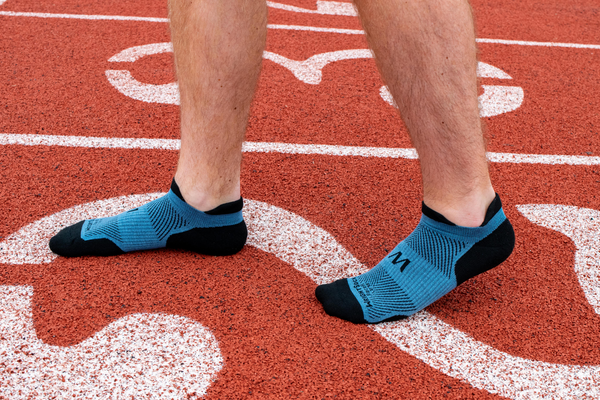
No-show socks are popular for warm weather and road running. They stay low in the shoe and offer a minimal look. A style with a heel tab can help the sock stay in place, which matters if you’re trying to avoid heel rub and the start of a blister.
Ankle or Quarter Socks
These styles provide a bit more coverage and can help reduce irritation around the heel collar. They’re a nice middle ground for runners who want a sock that stays put, and a good compression sock in this range can add a little extra structure around the arch and ankle.
Crew-Length Running Socks
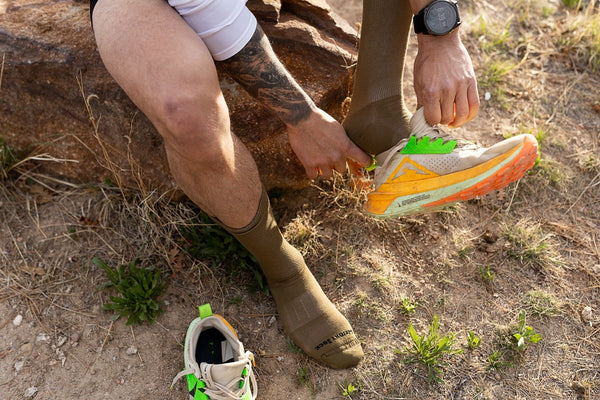
Crew socks offer extra coverage, a little more protection, and a style some runners simply prefer. They also make sense for trail running or cooler conditions.
Matching Socks to Your Running Routine
The best socks for running depend on the kind of training you do.
For road running, lightweight moisture-wicking socks are usually the go-to. For marathon prep or long weekend efforts, extra comfort and durability matter more. And if your workouts mix jogging with walking, socks for running and walking can offer balanced cushioning and support.
Running Socks vs Other Athletic Socks
Not all athletic socks are built for the same job. Running socks prioritize breathability, wicking, and reduced friction. Hiking socks usually lean harder into warmth and ruggedness, while cycling socks are often thinner and more minimal.
This is also where runners may compare well-known brands. A tester might prefer one for softness, another for fit, and another for durability, and our comparison of running vs hiking socks helps show where those differences matter.
Are Specialized Running Socks Worth It?
In a word: yes. If you’ve been asking yourself, are running socks worth it, the answer is often clear once you try a quality pair. Many runners underestimate how much socks affect comfort until they switch to quality running socks. Better materials help keep your feet dry, better construction supports a more comfortable fit, and better design improves overall performance.4 Quality socks provide better blister control, stronger durability, and more reliable arch support than many basic athletic pairs.
They’re often built with technical materials and structures designed for repeated use, which makes them a good value over time. For some runners, compression socks help with how secure the fit feels, especially during recovery or longer efforts. They also tend to last longer than basic socks, which makes them a good value over time.
Understanding What Makes Running Socks Different
Remember that running socks are built specifically for repetitive impact. They often feature breathable fabrics, support around the arch, and a smooth seam or seamless construction that reduces irritation. Those details matter for runners dealing with hot spots, recurring blister trouble, or even irritation linked to conditions like plantar fasciitis.
Choose Comfortable Running With Wrightsock
The best socks for running shoes manage moisture, reduce friction, and soften impact without getting in your way. We approach that challenge with a double-layer design that helps reduce rubbing between layers instead of against your skin.
That design gives runners a few meaningful benefits:
-
Better blister prevention
-
Stronger moisture control
-
More comfort for daily training and long runs
Whether you’re after lightweight options, more cushion, or versatile styles for different conditions, we offer men’s and women’s socks built for different runners and routines.
Sources
-
Journal of Athletic Training. Friction Blisters of the Feet: A Critical Assessment of Current Prevention Strategies. https://nata.kglmeridian.com/view/journals/attr/59/1/article-p8.xml
-
Fibers and Polymers. A Comprehensive Analysis of Moisture Management and Geometric Properties in Knitted Fabrics for Enhanced Sportswear Performance. https://link.springer.com/article/10.1007/s12221-024-00789-w
-
Fibers. Thermal and Moisture Management in the Microclimate of Socks for Diabetic Foot Care: The Role of Mohair-Wool Content. https://www.mdpi.com/2079-6439/12/7/53
-
Journal of the American Podiatric Medical Association. Experimental and Theoretical Predictions of Static Plantar Pressure of Socks. https://japmaonline.org/view/journals/apms/114/2/22-008.xml