Women need durable, strong, and comfortable socks designed with their own rigorous exercise routines in mind. But with so many cuts and lengths of women’s running socks, it can be hard to know which style to buy. No one wants to test a half-dozen different types of socks that might leave your feet sore, sweaty, uncomfortable, and blistered.
Identify the perfect running sock before you buy with this guide for women: Running socks, and how to find your ideal pair.
Step One: The Right Length
The first thing to account for is the desired length of your socks. All the features and cushioning of your running socks won’t mean a thing if their length isn’t giving you adequate protection. So before you buy socks, we recommend assessing what kind of running you’ll be doing.
Women Running Socks for Off-Road and Trail Running
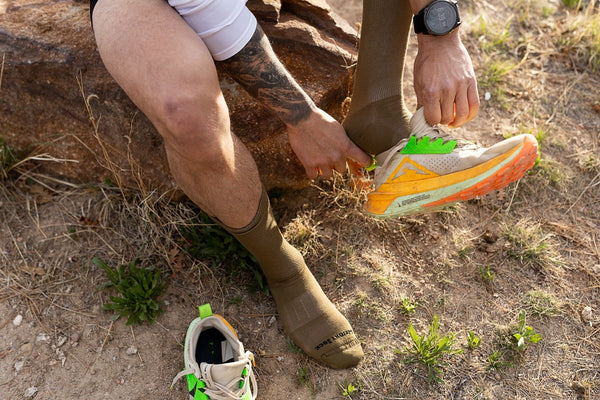
For rugged terrain, we recommend longer socks—at least quarter-length. It’s essential to protect your ankles and lower legs from briars, poison plants, and insects. Those expecting to run off-trail or through particularly tall foliage should consider opting for crew-cut socks.
Women Running Socks for Tracks and Treadmills
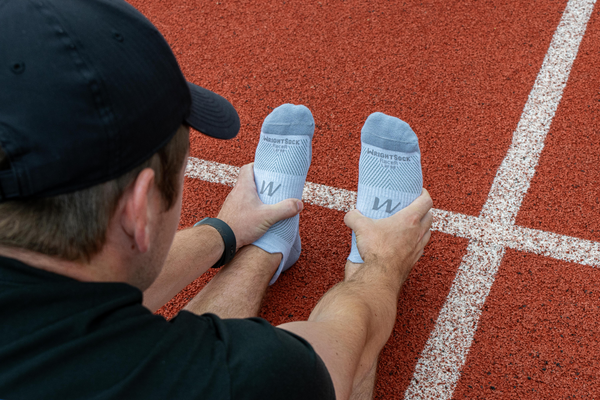
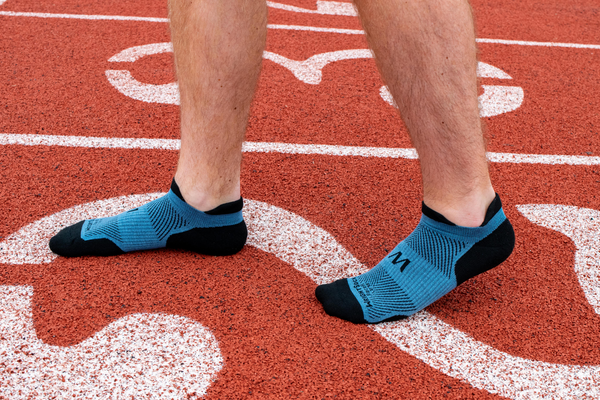
Those running indoors or on smooth running tracks should consider low-quarter socks instead. Even just a little less fabric can make a big difference in helping keep you cool.
But be warned, those who prefer very low-cut socks should be careful! Ankle and no-show women running socks will often slip from your heel during rigorous runs—which is frustrating and uncomfortable. That’s why we recommend tab socks for those who like a minimal feel since they offer all the benefits of ankle socks without the slip and slide.
Cushioning
The next step is to determine your preferred level of cushioning. Extra padding means more protection, but it comes at the cost of additional fabric.
Lightweight Running Socks
These are ideal for women who will be running on a treadmill or a smooth track. They’re excellent for spring or summer exercise when temperatures run high.
Light Cushion Running Socks
Do your running socks tend to rub? Light cushion is a great way to keep your feet protected while maintaining a minimal feel to your socks.
Cushion Running Socks
Do you expect a little more ruggedness on your running route? Cushion socks are ideal for women who need protection. They’re also perfect for those running outside in the colder fall or winter months.
Single or Double Layer?
The final question is an important one. Single or double-layer?
Double-layer women running socks are blister-proof socks guaranteed to protect your feet from the aches and pains of foot blisters. They provide all the protection of two pairs of socks without any of the annoying, surplus fabric.
That said, if your running route is gentle and you prefer ultra-thin socks, single-layer socks are your best choice!
Wrightsock: Home of the Best Women’s Running Socks
At Wrightsock, we pride ourselves on providing the highest quality socks for women. Running socks should be durable and comfortable-–and that’s what Wrightsock offers, in all the lengths and sizes that will keep your feet protected while you exercise.
Learn more about how the right socks keep your feet protected—and even help improve your athletic performance.
And for any other questions, contact us today!