Nobody likes sweaty feet, and during the winter months, it can be hard to find a perfect pair of socks that will keep your feet toasty without any unwanted moisture. Besides making your feet uncomfortable, sweat can also lead to easier chafing and blisters, so minimizing moisture is a good idea for everyone. Knowing what to look for in a pair of socks is your best bet to finding the perfect pair, but wading through all of the promises different brands make can be daunting.
5 Factors to Look for When Purchasing Warm No-Sweat Socks
Whether you’re naturally disposed to sweaty feet or just want a pair that will reduce the chances of sweating, you can narrow your search for the best socks for sweaty feet by looking for a few key features. Before you purchase a pair, make sure your warm, no-sweat socks have the following five features:
1. Moisture Wicking
Socks made out of material that provides moisture-wicking should be high on your list when hunting for the perfect pair of warm socks with a no-sweat design. Moisture-wicking material essentially pulls the sweat from your feet to the outer surface of the garment, preventing the uncomfortable, clammy feeling you’d get with other socks. Moisture-wicking socks will also dry quicker so that the sweat it’s taking away from your feet doesn’t soak into the sock itself.
2. Material
Merino wool is the standard for quality wool lined socks that won’t leave you with wet feet. Merino wool is a natural insulator that provides warmth without sacrificing breathability, making it ideal for folks prone to chilly feet and worried about sweat. If you’re worried about 100% wool socks being too warm for you, you’ll want to look for socks with a blend of Merino wool and synthetic materials.
As you look for the best socks for sweaty feet, you should avoid socks made primarily out of cotton. While cotton is soft, it tends to retain moisture. Try to find socks with either no cotton or a low cotton content if you’re on a mission to avoid sweaty feet.
3. Breathability
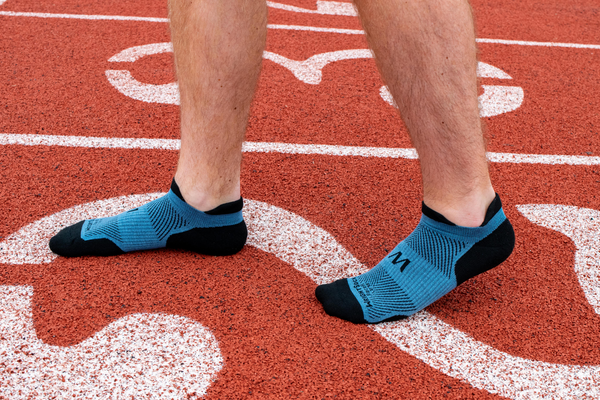
A pair of socks with strategically placed mesh panels in the design can be a game changer for folks whose feet get sweaty. The mesh creates more airflow throughout the body of the sock, improving breathability and reducing the amount of heat surrounding your feet.
Better ventilation doesn’t necessarily mean the socks will be less warm. For example, a good pair of merino wool socks with mesh panels will do a great job keeping your feet warm in the winter, even with the added airflow!
4. Seamless Construction
Seams don’t reduce the amount you’ll be sweating, but if you’re someone whose feet are naturally more prone to sweat, they can be a massive annoyance when it comes to chafing. Socks with a seamless design will minimize the amount of friction on your feet and reduce the chance of painful blisters.
If you’re an active person who likes to spend a lot of time doing outdoor activities, friction reduction is especially crucial. Since friction is a leading cause of blisters, you’ll want to look for outdoor socks that don’t have seams. Additionally, a seamless construction paired with a double-layer design can be especially effective at reducing or eliminating friction.
5. Sock Length
Choosing shorter or crew-length socks could possibly be beneficial for individuals on a mission to reduce how much their feet sweat in warmer socks. Less coverage on your legs and calves means less insulation in the area. Try to make sure that a lower-cut sock sits comfortably below the ankle for optimal breathability.
Choose Wrightsock for Anti-Blister Warm No-Sweat Socks
If you’re shopping for a warm pair of socks that won’t leave your feet drenched in sweat, choose Wrightsock. We offer a wide range of socks for all lifestyles, and our anti-blister socks are designed for all types of weather. We’re so confident in our double-layer socks’ ability to prevent blisters that we back them with our No Blister Guarantee, meaning we’ll give you your money back if you get a blister while wearing them.
Review our selection of warm, no-sweat socks for the winter today. We’re also happy to recommend our Merino Escape sock to those looking for warm, no-sweat socks, as it’s a high-quality Merino wool sock featuring added ventilation. If you have any questions or want help choosing a pair, please contact us.