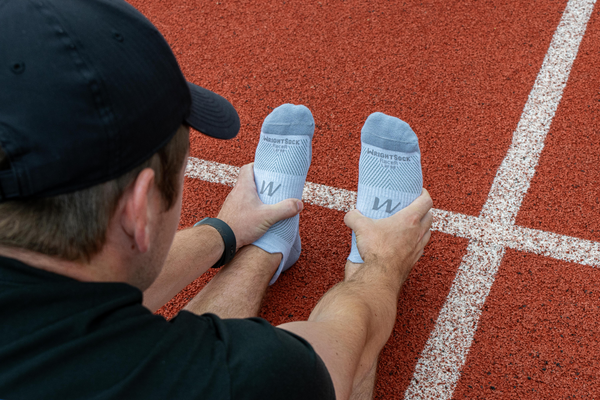
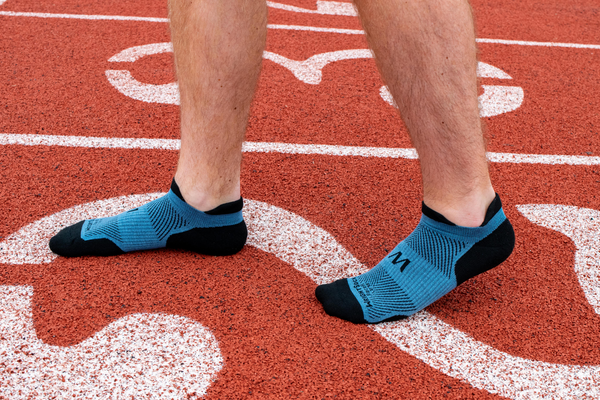
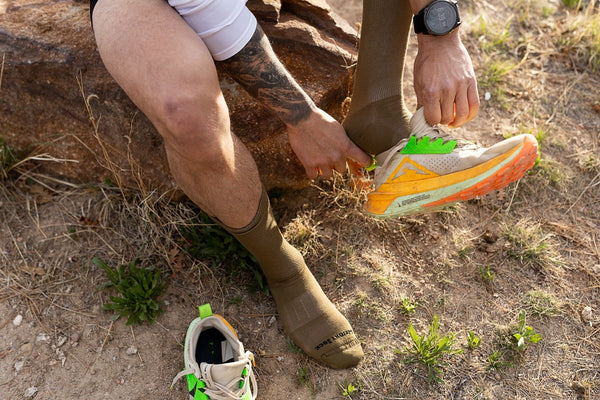
Choosing what socks to wear with trail running shoes comes down to three essentials: moisture-wicking materials, a secure fit, and light-to-medium cushioning in quarter or crew height. In other words, choosing the best running socks for the trail means finding the right socks for terrain, weather, and shoe fit, not just grabbing any pair that looks athletic.
Trail running demands more from your socks than road running because uneven terrain, rocks, hot weather, and variable conditions increase foot movement inside the shoe. Sock construction affects blister prevention and comfort just as much as material does.
Double layer trail running socks are designed for running, but the best ones are also designed for debris, friction, and changing conditions.
Why Sock Choice Matters for Trail Running Shoes
Your feet experience constant lateral movement on uneven terrain. Steep grades and technical sections cause your foot to shift inside the shoe, and the most common cause of blisters is friction between your shoes and skin.1 That extra movement around the foot can quickly lead to hot spots, especially if your pair of socks bunches or slips.
Trail socks also need to manage debris and moisture at the same time, which is why sock choice matters so much once the terrain gets rough. Moisture compounds the problem by softening skin and making it more vulnerable to blisters.
Managing moisture is essential to prevent foot blisters. A sock that bunches, slides, or traps moisture turns even well-fitted trail shoes into blister factories. Choosing the right running sock is one of the simplest upgrades any trail runner can make, and it's worth understanding if running socks are worth it to keep your feet healthy and stable.
The Best Socks to Wear with Trail Running Shoes
Three factors determine whether a running sock performs well on trails:
-
Fit: How securely the sock stays in place
-
Cushion level: The amount of padding and protection
-
Material: Which sock materials help prevent blisters
Moisture-Wicking Materials
Merino wool naturally regulates temperature and resists odor even during long efforts. Synthetic blends dry quickly and hold up well over time.
They’re especially useful in socks for hot weather, where airflow matters. Features like mesh panels or a breathable mesh weave across the top of the foot can make a noticeable difference, while reinforced toe and heel zones help fight wear and tear.
Moisture-wicking materials are non-negotiable (for any running gear) for blister prevention because wet skin becomes significantly more vulnerable to friction damage. When comparing wool vs. cotton socks, avoid cotton entirely because it traps sweat against your skin, creating ideal conditions for blisters.
Double-layer socks offer another approach through their unique construction. The inner layer pulls moisture away while friction occurs between the two layers rather than against your foot.
A Snug, Stay-Put Fit
Trail socks should fit like a second skin without bunching or wrinkling. A secure fit around the heel and ankle prevents sliding on steep climbs and descents, where loose fabric creates rubbing.
Good trail socks should feel secure from the bottom of the sock to the top of the sock, with enough hold around the arch of the foot to keep them from sliding when the trail gets steep. Look for minimal seams and performance socks designed to stay in place throughout your run.
Light to Medium Cushioning
Moderate cushion protects your feet without altering the shoe fit. Too much cushion makes trail shoes feel cramped, while too little leaves you feeling every rock.
For many trail runners, that’s the sweet spot because cushioned socks can protect against rocks and roots without feeling bulky. Very thin socks may feel faster, but trail socks are actually often better when they offer a little more substance. The goal is the best of both worlds: enough padding for protection, without creating a fit issue inside the shoe.
Most runners prefer moderate cushioning to balance comfort and protection without adding excessive bulk.2 For technical terrain, extra cushion at the heel and forefoot reduces fatigue on descents. Before getting into trail running, it’s helpful to consult a guide to trail running socks to have a deeper understanding of which socks are best suited for you and your level of comfort.

When choosing between crew socks vs ankle socks, consider that sock height affects protection from debris and shoe collar rubbing as much as material choice does.
|
Sock Height |
Coverage |
Best For |
|
Quarter |
Covers ankle bone while allowing airflow |
Moderate temperatures and well-maintained trails |
|
Crew |
Shields lower leg from brush and debris |
Overgrown trails, cold weather, and use with gaiters |
|
No-Show |
Leaves ankles exposed |
Smooth, groomed trails only (limited versatility) |
Quarter Socks
Quarter height remains the most versatile option for trail runners. These socks cover the ankle bone while allowing airflow, making them ideal for moderate temperatures and well-maintained trails.
Crew Socks
Taller crew socks shield your lower leg from brush, scratches, and kicked-up debris. Crew socks work especially well on overgrown trails or during colder months when extra coverage retains warmth.
The higher cuff also prevents gaiters from rubbing directly against the skin.
Are No-Show Socks a Good Idea?
No-show socks leave ankles exposed to dirt and rubbing from the shoe collar. They can work on smooth, groomed trails but lack the versatility of quarter or crew heights for most conditions.
How to Choose Socks Based on Trail Conditions
Match your sock selection to the conditions you expect to encounter.
For Warm Weather Trails
Lightweight, breathable socks in quarter height help keep feet cool while running and protect against debris. Prioritize breathable socks made from moisture-wicking materials with minimal cushion.
For Rocky or Technical Trails
Medium cushion and a secure fit matter most when navigating rough descents. Durability and blister prevention are critical in challenging terrain.
For Cold, Wet, or Debris-Heavy Conditions
Crew height merino blends retain warmth even when damp and keep moisture from lingering against your skin.
Common Mistakes to Avoid When Choosing Trail Running Socks
Steer clear of these common errors:
- Cotton socks: Retain moisture and dramatically increase blister risk
- Overly thick socks: While some assume that thicker socks do prevent blisters, they actually alter shoe fit and create uncomfortable pressure points
- Loose-fitting socks: Bunch and slide on uneven ground
- No-show socks on rugged trails: Leave ankle areas vulnerable to debris
- Skipping a test run: Always try new socks before race day

Trail Running Socks vs Regular Running Socks
Trail running socks prioritize durability, debris protection, and secure fit. Road running socks emphasize lightweight breathability and lower profiles.
Trail runners typically need taller sock heights and benefit from slightly more cushion to handle variable terrain. Learn more about what trail running is and what it demands from your gear.
Find Trail Running Comfort with Wrightsock
The best socks for trail running shoes wick moisture, fit securely, and minimize friction through thoughtful construction. Double-layer trail running socks address all three by allowing layers to move against each other rather than against your skin, providing reliable blister prevention.
We are a family-owned, American-made brand built around blister prevention. Every double layer pair comes with a blister-free guarantee and reflects decades of performance-focused innovation. We have a full range of men's and women's socks fit for your trail running journey.
Sources:
-
Cleveland Clinic. 5 Ways To Avoid Blisters (and the Best Way To Treat Them). https://health.clevelandclinic.org/5-ways-to-avoid-blisters-and-the-best-ways-treat-them
-
Runner's World. The 6 Best Trail Running Socks for Venturing Beyond the Pavement. https://www.runnersworld.com/gear/g61193836/best-trail-running-socks/