When you’re gearing up for the trail, your socks are just as important as your boots. The right pair can transform a long slog into a smooth, comfortable trek. It will keep your feet dry, supported, and blister-free from the first mile to the last.
Whether you’re heading out for a casual day hike, a multi-day backpacking trip, or a strenuous alpine climb, this guide breaks down exactly what socks to wear with hiking boots. Wear hiking socks with the best materials, cushioning levels, heights, and fit tips, so you can hit the trail with confidence.
Why Sock Choice Matters in Hiking Boots
A great pair of hiking boots can only take you so far if your socks aren’t pulling their weight. The wrong material or thickness can trap moisture, increase friction, or leave your feet feeling overheated and fatigued. The right socks, on the other hand, create a comfortable micro-environment around your foot that boosts performance, comfort, and endurance on every trail.
Blister Prevention Through Moisture + Fit
Blisters form when sweat, heat, and friction join forces. Socks that slide, bunch, or hold moisture make things even worse, causing hot spots that can derail your hike in minutes. That’s why understanding what causes hiking blisters is essential before choosing your gear.
High-performance materials and a supportive fit help eliminate the slippage and dampness that feed blister formation. Wrightsock’s Double-Layer® anti-blister design tackles these issues head-on by reducing friction inside the sock itself, long before it reaches your skin.
Temperature & Moisture Regulation
Hiking covers a wild range of climates from sweaty summer switchbacks to icy mountain passes. Materials like Merino wool and synthetic fibers help regulate temperature by wicking away moisture and allowing heat to escape when needed. Dry feet stay cooler in summer, warmer in winter, and happier all year long.
Best Materials for Hiking Socks
Choosing the right fabric is one of the easiest ways to elevate your hiking comfort. Here’s what to look for when deciding what socks to wear with hiking boots.
Merino Wool
Merino wool is basically a superhero in sock form. Socks made with this type of wool are breathable, naturally odor-resistant, soft against the skin, and surprisingly effective at regulating temperature across all four seasons. Whether you're hiking in July humidity or January frost, the best socks adapt to keep your feet comfortable.
Synthetic Blends
Synthetic blends—especially those made with performance polyester—are durable, fast-drying, and great for humid, wet, or sweat-heavy conditions. Wrightsock’s synthetic options also incorporate recycled fibers, supporting sustainability without sacrificing performance. If you're prone to sweaty feet or hiking in muggy climates, synthetics are your friend.
Why to Avoid Cotton
The best hiking socks are not made of cotton. Cotton may feel cozy at home, but on the trail it's a moisture-trapping nightmare. It soaks up sweat, stays wet, and dramatically increases friction, making blisters almost inevitable. For hiking shoes, cotton is always a no-go.
Choosing the Right Cushioning
Cushioning affects comfort and influences how your boots fit and perform. Here’s what to consider with cushioned socks:
-
Lightweight cushioning – Ideal for hot weather or short, easy trails. Lightweight socks pair well with snug-fitting boots because they add comfort without bulk during summer hikes.
-
Midweight cushioning – A versatile middle ground for most hikers. Midweight socks deliver more protection underfoot, making them perfect for moderate to rugged terrain, longer hikes, or backpacking trips where pack weight increases foot fatigue.
-
Heavyweight cushioning – Heavyweight cushioning provides serious protection and warmth, making it best for cold climates, stiff mountaineering boots, or high-elevation treks.
Matching Sock Height to Boot Height
Sock height helps prevent rubbing, improve protection, and create a smooth transition between your leg and the boots you wear when hiking:
-
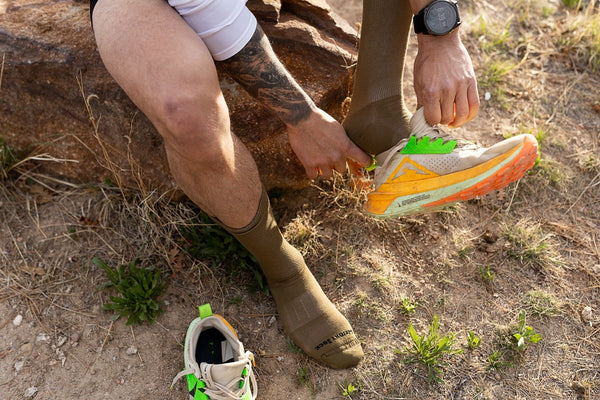
Crew-length socks – The go-to height for most hiking boots. Crew socks prevent the boot collar from rubbing your ankles and lower calves while offering just the right amount of coverage.
-
Over-the-calf options – These taller wool socks are ideal for winter hiking and mountaineering. They add warmth, reduce friction, and help keep debris out.
Trail-Specific Recommendations
If you want a quick cheat sheet, here’s how to pick the perfect hiking socks for different types of adventures:
-
Casual day hikes – Go with lightweight Merino wool socks or thin synthetic blends. You’ll get breathability, speed-drying performance, and all-day comfort without overheating.
-
Multi-day backpacking – Choose midweight cushioning to balance support and blister protection, especially when carrying more gear, as outlined in our guide to long distance hiking socks.
-
Hot/humid trails – Ultralight Merino or quick-dry synthetic blends keep sweat at bay and maintain airflow when the sun is beating down.
-
Cold weather hiking – Heavyweight Merino blends or thermal socks trap warmth, insulate your feet, and prevent cold-induced stiffness.
Fit Tips to Improve Comfort
Even the best pair of socks can fall short if they don’t fit properly. When your socks fit well, you can also give your best hiking performance.
Snug, Not Tight
Your lightweight hiking socks should hug your feet without squeezing them. A snug fit keeps fabric from bunching or sliding, which are two major contributors to blisters. If your boots are still stiff, there are effective ways to break in new hiking boots that can help improve comfort.
When Layering Helps (and When It Doesn’t)
Traditional sock layering is rarely necessary today. Modern double-layer hiking socks like Wrightsock’s anti-blister designs do the job more effectively by absorbing friction internally. Only layer when extreme cold requires it.
Balance Comfort and Performance with Wrightsock
Choosing the right hiking socks is one of the simplest ways to upgrade your comfort, prevent blisters, and keep your feet happy on any trail. Focus on materials that wick moisture, cushioning that matches your terrain, and heights that complement your boots. With the right pair, every step becomes smoother, cooler, and more supported.
Ready to elevate your next adventure? Explore our Made in the USA, blister-free men’s and women’s socks and find your perfect trail companion.
Sources
-
PubMed Central. “Friction Blisters of the Feet: A Critical Assessment of Current Prevention Strategies.” https://pmc.ncbi.nlm.nih.gov/articles/PMC10783476/.
-
CommonShare. “Merino Wool and the Future of Sustainable Sportswear: Innovation, Ethics, and Performance,” https://news.commonshare.com/blog/merino-wool-and-the-future-of-sustainable-sportswear-innovation-ethics-and-performance.