If you’re in the market for a new pair of socks, one essential factor is their size. As you pick a pair of socks, it’s important you know their brand’s sizing system, the type of sock you’re buying, and the activity you’ll be doing while wearing them. Find out more about the three main factors you’ll need to take into account to pick a perfectly sized pair of socks.
How Do I Know What Size Socks to Buy?
First, break down how the manufacturer sizes their socks (whether shoe size or inches). Then, factor in the type of activities you’ll be doing in the socks. Cycling and athletic socks will require a more snug fit to fit in tight shoes or cleats. Socks for more casual activities can have a looser fit.
But there’s much more that goes into sock sizes, such as knowing the right sock fit for every sport, choosing the right length, or knowing whether you should aim for a size up or down. Socks might seem simple, but there’s a lot to finding your perfect pair.For a step-by-step breakdown of how to choose sock size, keep reading!
1. Know the Difference Between Sock Sizes Based On Shoes and Those Based on Measurements
When you’re looking for the right pair of socks, you should check if the manufacturer sizes their socks based on shoe size or by foot length in inches. These two sizing systems are the most common in the U.S., and it’s important to know the difference between them before you make a purchase.
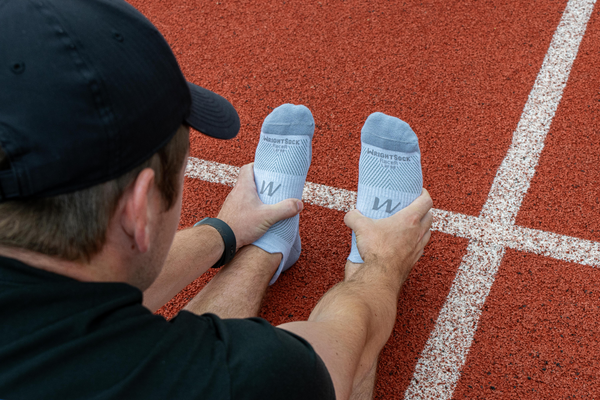
If a company bases its sock size on shoe size, the socks’ packaging will often come with a label stating they use this type of sizing system. Generally, a company using this system will offer their socks in small, medium, large, and extra-large sizes, with each of them corresponding to a range of shoe sizes. For example, a pair of men’s medium anti-blister socks from Wrightsock will fit someone with a five through eight shoe size, meaning as long as your shoe size is in this range, they’ll fit.
In contrast, another company might offer their socks in sizes based on feet measurements in inches. When a company labels their sock sizes in measurements like “9-11” or 10-13”, you’ll need to know the length of your feet in inches to determine whether you can fit in them.
To see if your feet can fit one of these measurements, you’ll need to measure your foot from the tip of your toe to the heel. If your feet are nine inches long, you’ll know your feet can fit a pair of socks in the 9-11” range.
2. Know the Type of Sock You’re Purchasing
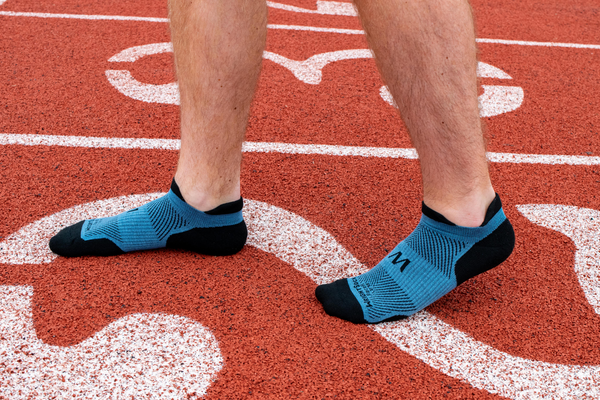
When you’re buying a pair of socks, it’s also important to check what type it is. While the sock’s size can tell you if it will fit on your foot, it doesn’t say anything about the height of the sock. Since the sock type will tell you about its height, check it before you buy. For example, no-show socks only cover part of your foot, while mid-calf socks extend halfway up to your calf.
3. Take Into Account the Activity You’ll Be Doing While Wearing the Socks
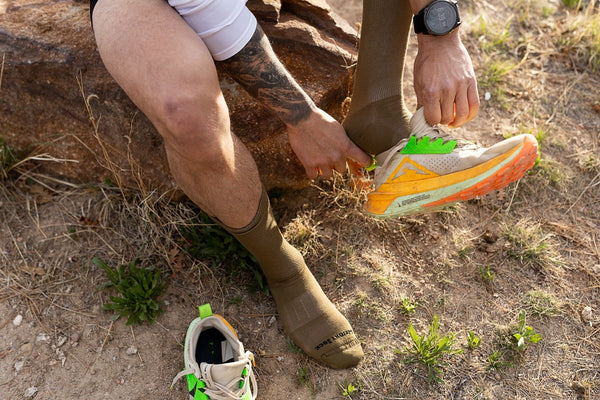
While knowing your feet’s measurements, shoe size, and the type of sock are all important factors, you’ll also want to consider the activity you’ll be doing while wearing your socks. For example, if you enjoy trail running, you might want to try a smaller sock size for greater snugness. Since a snug fit keeps your feet in place while running on uneven trails, a smaller size could be preferable.
Before you buy a new pair of socks, researching the best sock fit for a particular activity can let you know if you should go a size up or down to improve your performance. However, if you just plan to wear your socks around town, a sock fitting your shoe size or foot length is usually the best choice.
Choose Wrightsock for Anti-Blister Socks
If you’re looking for blister relief while running, hiking, working, or cycling, you’ll love Wrightsock’s blister-free socks. Since our socks are sized to shoe size, you can easily find a pair meeting your needs. They’re also designed for maximum temperature-regulation, moisture-wicking, and friction absorption, meaning they eliminate the three main causes of blisters. Due to their simple sizing and blister relief design, you can always expect them to give you the best in comfort and performance.
Check out our selection of anti-blister socks and sock sizing chart today. If you have any questions, please feel free to contact us.