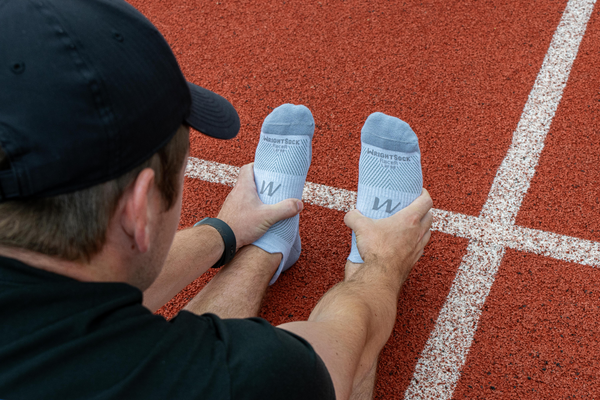
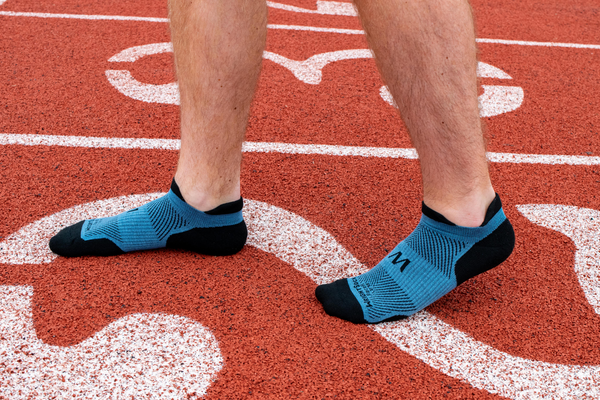
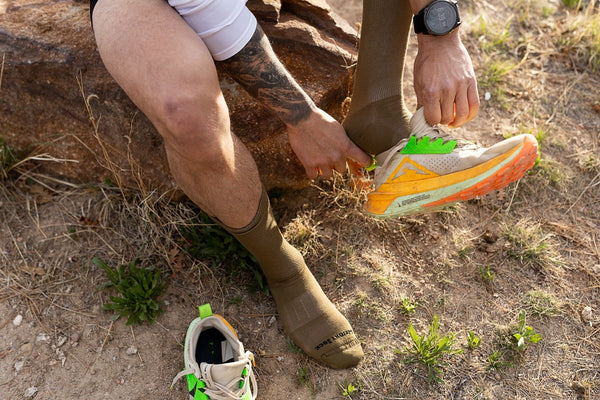
What are anti-blister socks? Do they actually prevent blisters? Wrightsock is here to answer all of your questions about blister prevention technology of anti-blister socks.
The Science Behind Blisters
Let’s back up for a moment. Before understanding how to prevent blisters, it is essential to understand blisters and how they start. Here is a quick FAQ to help us unpack the science behind blistering:
- So what exactly is a blister? Healthline defines blisters as “a raised portion of skin that is filled with fluid.” In the medical world, they are also called vesicles.
- How do blisters start? Blisters happen when friction causes layers of skin to separate, which then fills with fluid.
- Why do running and hiking cause blisters? Blisters are commonly associated with sports, running, hiking, and other fitness activities. Why? When you are active on your feet, your shoes are more likely to create the friction needed to start a blister. Heat and moisture are also known to intensify blistering, and these are common side effects of physical activity.
- How do I prevent blistering? To prevent blistering, you need to address these problems at the source. Anti-blister socks work to combat all of the troubles that lead to blisters.
How Do Anti-Blister Socks Work?
There are different methods of blister prevention available:
- Double-layer technology: Wrightsock’s patented Double Layer system works to absorb the friction between your shoe and sock. With this technology, we offer a variety of different features, materials, and thickness options.
- Coated socks: Some sock brands coat the inner layer of their socks with sticky materials. This can prevent the movement of socks, but some may find it uncomfortable or ineffective.
- Compression socks: Other sock brands work using compression. In theory, tight-fitting socks can help prevent movement and friction.
Sock Materials: Preventing Heat and Moisture
The materials of your socks also play a significant role in preventing blisters.
As we mentioned earlier, heat and moisture intensify blistering during physical activities. As such, preventing blisters also involves addressing the heat and moisture.
Certain materials work to absorb moisture, while others wick moisture away. Breathable materials help you beat the heat (though you may opt for thicker socks during colder weather). Strategic padding can also help eliminate hot spots. Truthfully, every sock fitness level, material, and design is different. It is helpful to take a moment and explore your sock options and how they may support your adventures. The best anti-blister socks are the right socks for YOU.
Beyond the Socks
Anti-blister socks are proven to help keep blisters away. In fact, anti-blister guarantees ensure you will not pay for socks that do not prevent blisters. However, sometimes the cause of blisters (and their solutions) go beyond your socks. Let’s take a look at some other causes of blisters on the go:
- Large fitting shoes: If your shoes fit loosely against your feet, this leaves extra room for movement. As mentioned above, movement causes friction and blistering. In severe cases, your shoes may offer more trouble than anti-blister socks can protect you from.
- Tight or small shoes: Especially during a game, run, or hike, you might be tempted to tie your shoes as tightly as possible. This can keep them on your feet and may even help minimize the movement/friction of your shoes. However, when friction does occur, it will be sharply magnified because your feet and shoes are already pressed so closely together. With every miscalculated kick, slide, or fall, your shoes will cause intense friction that is amplified by the tightness of your laces.
- Skin sensitivity: Blisters can be caused or worsened by certain skin conditions. If you experience abnormal blisters or sensitivities, consider speaking with a dermatologist.