Choosing between crew socks vs ankle socks comes down to one simple truth: the right height depends on where you're going and what you're doing. Crew socks deliver warmth, coverage, and protection for rugged trails and cooler weather. Ankle socks keep you cool, light, and unrestricted when temperatures climb or freedom of movement matters most.
This guide will tell you the key differences between crew socks and ankle socks and how each sock height performs across warmth, breathability, protection, support, and style, so you can match your socks to your activity with confidence.
Understanding Sock Lengths
The main difference between crew socks and ankle socks comes down to height, but that shorter length or longer length directly impacts temperature control, friction management, and how your socks work inside your shoes.
Before deciding between crew or ankle, it helps to understand what each style is designed to do.
Quick Comparison at a Glance
|
Factor |
Crew Socks |
Ankle Socks |
|
Height on Leg |
Mid-calf |
Just above ankle bone |
|
Best Climate |
Cool to cold |
Warm to hot |
|
Footwear Pairing |
Boots, high-tops |
Sneakers, low-cut shoes |
|
Typical Activities |
Hiking, court sports |
Running, gym, casual |
|
Protection Level |
High (debris, abrasion) |
Targeted (underfoot cushion) |
|
Style Vibe |
Visible, expressive |
Minimal, hidden |
What Defines a Crew Sock?
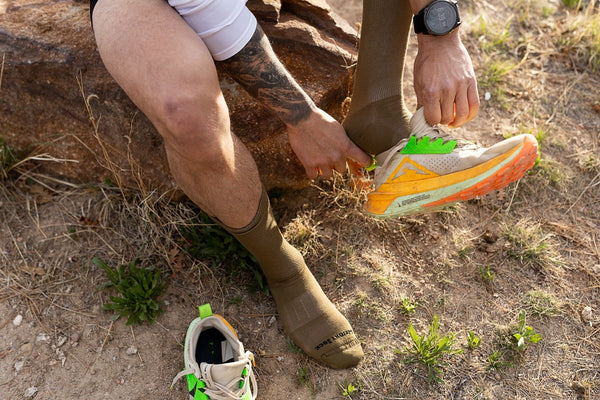
Crew socks extend roughly six to eight inches above your heel, landing around mid-calf. That extra height means crew socks offer protection from debris, boot friction, and environmental exposure, helping provide more coverage around the ankle, shin and calf. These socks often feature reinforced zones and structured support, making them a go-to for hiking, court sports, and long days on your feet.
What Defines an Ankle Sock?
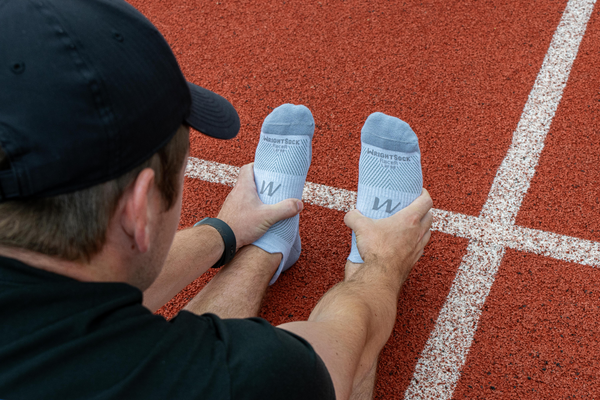
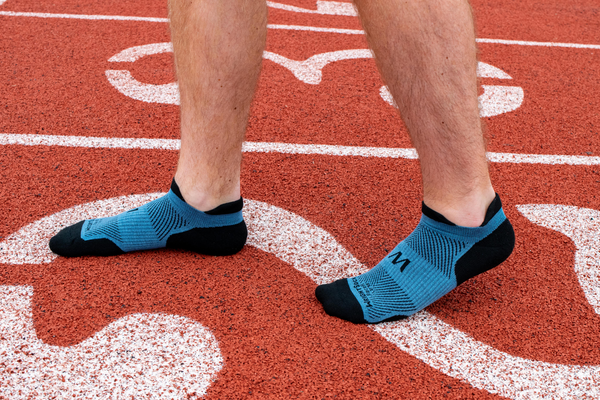
Ankle socks sit just above the ankle bone, rising slightly past the shoe collar for a low-profile fit. Their shorter length reduces heat buildup, making them a strong choice for warm weather, running, and gym training.
The low-profile fit stays hidden inside most sneakers and low-cut shoes, offering minimal coverage that works well for casual wear and gym sessions. For those who prefer even less visibility, quarter length socks and low quarter length socks are perfect for breathability without sacrificing support where your foot needs it most.
Warmth & Breathability
Your sock choice directly impacts how your feet and lower legs regulate temperature. Taller socks retain more warmth, while shorter ones allow warm air to escape.
Crew Socks: Heat-Holding Benefits
Because of their longer length, crew socks may trap warm air around the ankle and calf, helping shield your lower leg from wind and cooler conditions. Many styles use cushioned panels and medium-weight yarns to maintain warmth during outdoor activity.
Ankle Socks: Cool & Airy
Feet can produce a surprising amount of sweat during activity, which can overwhelm standard sock fibers. Wearing ankle socks provides a lightweight and breathable nature that promotes airflow and faster evaporation. With reduced fabric coverage, ankle socks offer efficient cooling, making them ideal for warm weather, indoor training, and high-intensity workouts.
Protection & Cushioning
Beyond temperature control, sock height determines how much physical protection your feet and lower legs receive. Crew socks guard against friction and debris, while ankle socks focus padding where impact occurs most.
Crew Socks in Rugged Scenarios
Wearing crew socks for added coverage helps block trail grit, brush, and boot friction. Reinforced heel and toe zones reduce rubbing from laces and stiff materials, which can significantly impact your comfort over long distances. Research on blister prevention in runners consistently highlights friction reduction and moisture control as key factors in preventing hot spots and skin breakdown.
Ankle Socks for Everyday Comfort and Cushioning
Performance ankle socks offer additional padding under the heel and ball of the foot. The shorter length reduces bulk while still delivering comfort inside sneakers and low-cut shoes. Heel tabs help ensure the socks stay in place and protect against collar friction.
Support & Injury Prevention
The amount of structure around your foot and ankle affects both performance and recovery. Matching sock height to your physical demands helps reduce fatigue and injury risk.
When Crew Compression Shines
Crew socks often incorporate arch bands and light compression, improving blood flow back toward the heart. This can speed recovery after long efforts. Meanwhile, integrated arch bands combat the plantar fatigue that develops when you spend hours on your feet.
Sports that involve quick direction changes, like basketball, tennis, or pickleball, benefit from the added ankle support that crew socks provide. The snug fit around your lower leg reduces muscle vibration during high-impact landings.
When Minimal Structure Works
Ankle socks allow your foot and ankle to move through their full natural range without restriction. This freedom benefits explosive movements like sprints, box jumps, and agility drills.
Less fabric also means fewer pressure points against your skin during repetitive motion. Athletes who prefer minimalist or zero-drop socks for running often find ankle socks complement that lightweight and breathable approach.
Style & Lifestyle Considerations
Crew socks are visible by design and embraced by Gen Z for casual and athletic wear alike. They pair easily with shorts and layered outfits.
Ankle socks disappear into shoes, creating clean lines that work well with sneakers, dress shoes, or casual outfits. No-show socks offer a similar aesthetic with even less visibility.
Making a Statement with Crew Socks
Crew socks showcase patterns, stripes, and logos that become part of your overall look. Bold designs pair well with high-top sneakers or chunky shoes for a retro or streetwear vibe.
The extra length also functions as a light leg warmer during transitional seasons when mornings are cool but afternoons warm up. For more styling ideas, explore the best men's quarter socks to find a balanced fit.
Clean Lines with Ankle Socks
Ankle socks disappear beneath chinos, jeans, or joggers, creating a "no-show" effect that keeps the focus on your shoes. Sneaker enthusiasts often prefer this minimal aesthetic so footwear remains the centerpiece.
The compact size also makes ankle socks easy to pack for travel. When simplicity matters for casual outings, ankle socks deliver a polished finish without distraction.
Choosing the Right Height for Your Activity
Now that you understand how each sock height performs, applying that knowledge to specific situations becomes straightforward.
Reach for Crew Socks When…
Choose crew socks under these conditions:
-
Hiking uneven terrain where debris could enter your boots
-
Playing court sports that demand lateral stability
-
Training outdoors when temperatures drop below 60°F
-
Wearing mid-height boots or high-top sneakers
For specific activity needs, understanding the differences between running and hiking sock designs helps match your socks to your sport.
Opt for Ankle Socks When…
Ankle socks make sense in these situations:
-
Running roads or treadmills in warm weather
-
Attending gym classes or lifting sessions
-
Wearing low-cut shoes for casual outings
-
Prioritizing a sleek, minimal appearance
For a deeper breakdown of every sock length option, see our complete guide to sock lengths.
Pick the Perfect Height with Wrightsock
Choosing the right sock height sets the foundation for comfortable, blister-free wear. Crew socks deliver warmth, coverage, and stability for rugged conditions and cooler weather. Ankle socks keep you cool, light, and unrestricted when temperatures rise or freedom of movement matters most.
Wrightsock builds both crew and ankle socks with double layer construction that absorbs friction before it reaches your skin, helping prevent hot spots and blisters during any activity. Made in the USA with recycled fibers and backed by a blister-free guarantee, Wrightsock offers performance options for running, hiking, cycling, work, and everyday wear. Explore the full collection of men's and women's socks to find the perfect socks for your next adventure.
Sources
-
PubMed Central (PMC), National Center for Biotechnology Information (NCBI), National Institutes of Health (NIH). Friction Blisters of the Feet: A Critical Assessment of Current Prevention Strategies. https://pmc.ncbi.nlm.nih.gov/articles/PMC10783476/
-
Verywell Health. 9 Proven Ways to Prevent Blisters When Running. https://www.verywellhealth.com/how-to-prevent-blisters-when-running-11809024