If you love running through the woods or are considering getting into trail running, one of the best ways to improve your performance is to wear a great pair of trail running blister-free socks. Since these socks are designed specifically for trail runs, they’re a much better option than standard running socks. To ensure you buy the best pair possible, learn more about trail running socks and the main features you should look for when purchasing them.
How Are Trail Running Socks Different Than Standard Running Socks?
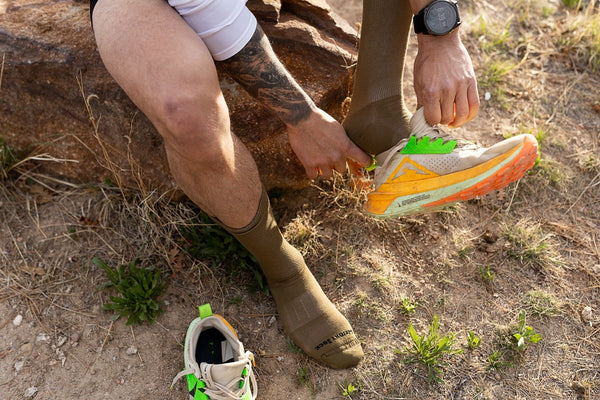
Unlike running socks, trail running socks tend to be taller and feature a tighter elastic band at their top to keep dirt, rocks, and small sticks from getting inside them or harming your ankle. These socks also usually have more cushioning that goes past the heel to protect a runner’s feet from the more difficult terrain a trail presents.
Since a trail is typically more uneven than a road, trail running socks regularly come in a more snug fit to prevent a runner’s feet from shifting. These unique features help you avoid injury and increase your performance when running on dirt pathways, making trail running socks a much better choice than standard running socks.
Tips for Finding the Perfect Pair of Anti-Blister Trail Running Socks
As you look for the right pair of anti-blister trail running socks, you’ll want to make sure they have a few features that provide blister relief and help you improve your performance out on the trail. Find out more about the top features you should look for in a pair of anti-blister trail running socks below:
- Friction absorption design: While you run on a trail, your feet will generate friction. This friction can cause blisters, as friction creates heat and weakens your skin. To avoid blisters and reduce friction, purchase a pair of double-layer socks featuring an inner and outer layer designed to absorb friction and prevent blisters.
- Snug fit: While you run on uneven trails, your trail running socks should be snug enough that they don’t let your feet slip around. A great pair of socks will contour around your feet, giving you a snug fit that keeps your feet in place. Instead of purchasing a pair of socks in your regular size, try a size smaller first to see if it gives you a snug fit.
- Moisture-wicking fabric: On the trail, your feet will sweat and could come in contact with water, wet grass, and mud. Since wet feet and socks are uncomfortable and can cause blisters, look for trail running socks made from moisture-wicking fabric. This fabric will keep sweat from building up, reduce bacteria and odor due to its greater breathability, and make it so your socks dry out faster if you step in a puddle.
- Extra cushioning: Since you’ll have to jog on terrain filled with rocks, roots, and sticks while trail running, you’ll want a pair of socks with more cushioning than your standard running socks. With extra cushioning around your feets’ sensitive areas, you’ll put less strain on your feet. A pair of double-layer socks can give you the extra cushioning you need to stay comfortable out on the trail.
- High durability: While you run on a trail, your socks need to be durable and hold up against the environment, staying strong despite the rough terrain and potentially wet conditions. As you search for the perfect pair of trail running socks, try to buy a pair with a reputation for lasting hundreds of miles.
Choose Wrightsock for Your Next Pair of Blister-Free Trail Running Socks
If you want anti-blister trail running socks meeting all the criteria above, Wrightsock has you covered. As blister relief specialists, we’ve designed our double-layer anti-blister socks to wick away moisture, absorb friction, and provide exceptional durability, meaning you’ll be protected from all the main causes of blisters. Our trail running socks are also crafted specifically for the trail, reducing your chance of injury and raising your performance while you run in the woods.
Browse our double-layer running socks today. Some of our favorite trail running socks we offer include our Explore Multi Sport Quarter Socks and Coolmesh II Crew Socks. If you have any questions, don’t hesitate to contact us.